Art Movements
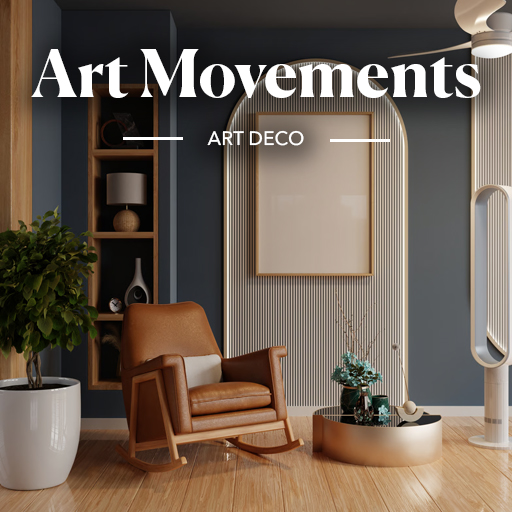
Art Deco
Art Deco interior design is a glamorous and sophisticated style that emerged in the early 20th century, reaching its peak in the 1920s and 1930s. It is defined by bold geometric patterns, such as zigzags, sunbursts, and chevrons, and an emphasis on symmetry and streamlined forms. The aesthetic utilizes a luxurious palette of rich colors and high-end materials, including chrome, glass, lacquer, marble, and exotic woods, to create opulent, high-contrast spaces. Often associated with the "Machine Age," Art Deco combines decorative craftsmanship with industrial motifs to deliver a timeless sense of elegance and modernity.
Art Movements
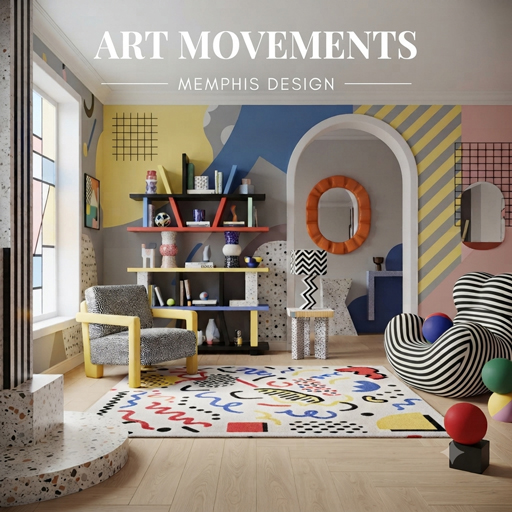
Memphis Design
Memphis Design is a radical postmodern movement that emerged in the 1980s as a vibrant reaction against the restraint of minimalism. Characterized by a "form follows fun" philosophy, this style utilizes bold geometric shapes, clashing primary and neon colors, and eccentric patterns like squiggles and dots. Often incorporating unconventional materials such as plastic laminate and terrazzo, Memphis Design creates playful, high-energy spaces that blend Art Deco elegance with Pop Art whimsy to challenge traditional notions of good taste.
Art Movements
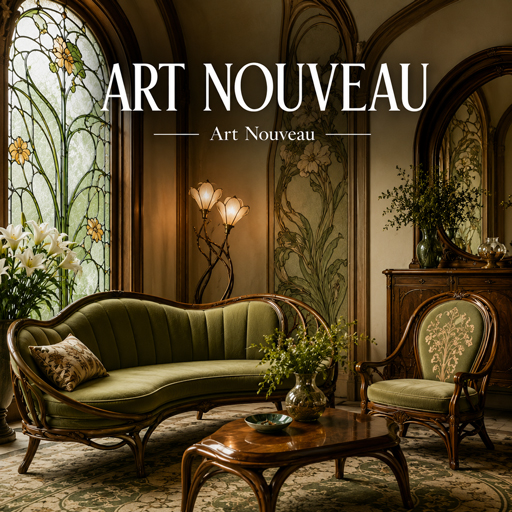
Art Nouveau
Art Nouveau interior design is a decorative movement from the late 19th and early 20th centuries characterized by its celebration of the natural world through long, sinuous, and organic lines. Often featuring "whiplash" curves, asymmetrical forms, and floral motifs, this style sought to unify fine arts and functional design in architecture, furniture, and glassware. By utilizing materials like stained glass, wrought iron, and polished hardwoods, Art Nouveau creates immersive, fluid environments that emphasize handcrafted quality and elegant ornamentation over industrial mass production.
Art Movements
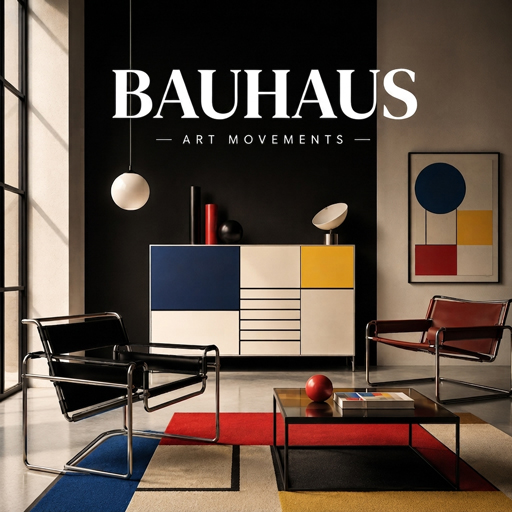
Bauhaus
Bauhaus interior design and architecture are defined by the core principle that form follows function, emphasizing rationality and the elimination of unnecessary ornamentation. Originating from the influential German school founded by Walter Gropius in 1919, this style is characterized by clean lines, geometric forms, and an open floor plan that prioritizes efficiency and flow. By integrating art with industrial technology, Bauhaus utilizes modern materials like steel, glass, and concrete alongside a palette of neutral tones and bold primary accents to create spaces that are both aesthetically harmonious and optimized for mass production.