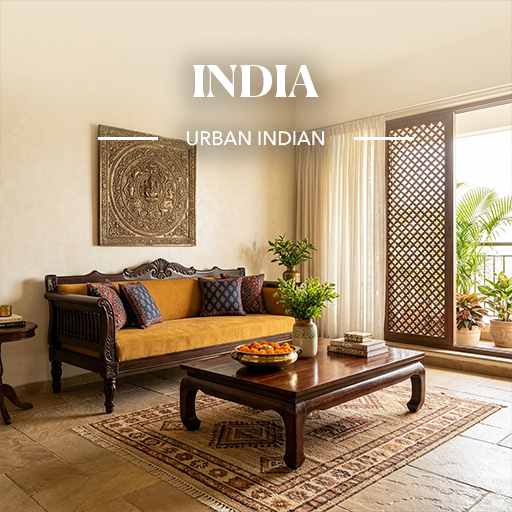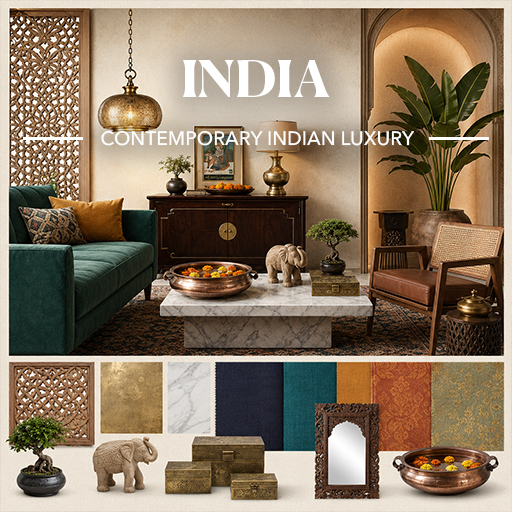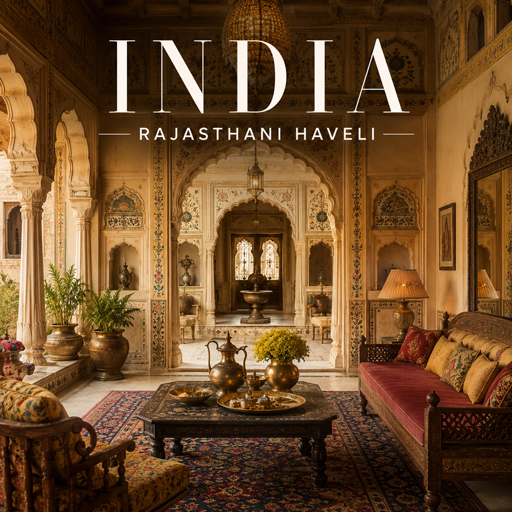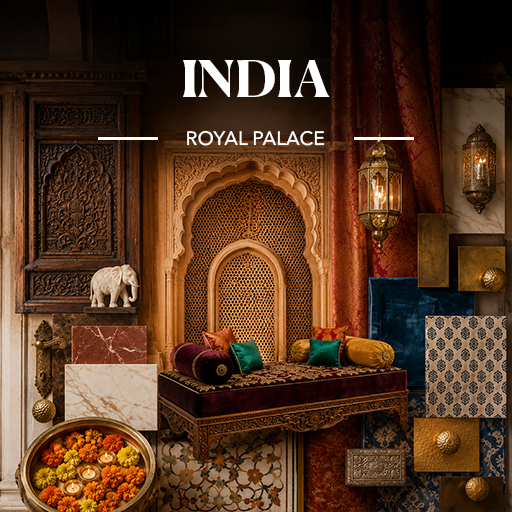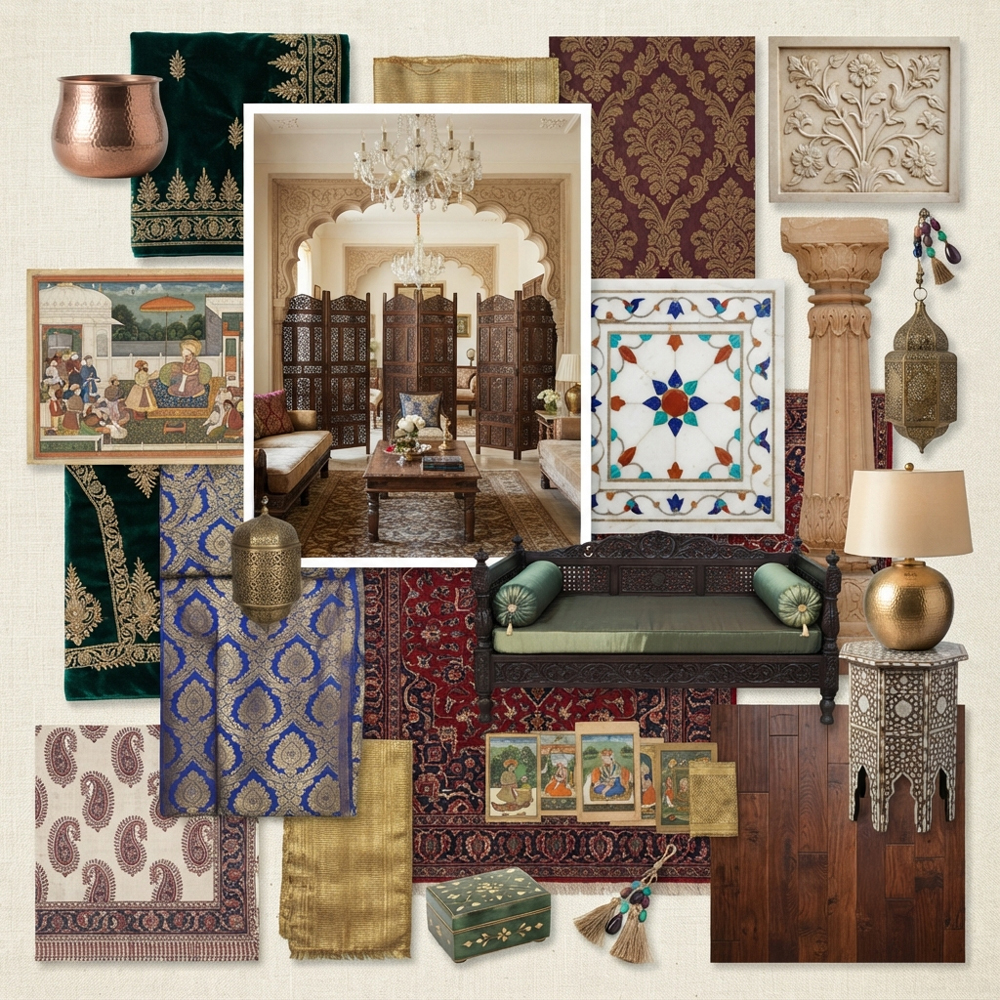
Mughal interior design is a regal and opulent style originating from the 16th-19th century Mughal Empire, characterized by a harmonious fusion of Islamic, Persian, and Indian influences. It is defined by structural grandeur featuring bulbous domes, symmetrical layouts, and signature multifoil arches, alongside decorative elements like intricate jali (lattice) screens and pietra dura (stone inlay). The aesthetic utilizes a sumptuous color palette of jewel tones—emerald, ruby, and sapphire—set against neutral marble or sandstone, creating spaces that emphasize mathematical precision, bilateral symmetry, and luxurious layering through embroidered textiles and carved woodwork.
Upload a photo of your room and our AI restyles it in the Mughal aesthetic — no signup needed.
Mughal interior design is a richly ornamental and regal style that originated in the Indian subcontinent between the 16th and 19th centuries, representing a masterful synthesis of Islamic, Persian, Turkish, and indigenous Indian architectural traditions. This aesthetic is defined by its rigorous commitment to symmetry and balance, often featuring the iconic Mughal arch—a cusped or multifoil silhouette—alongside grand vaulted ceilings and majestic pillars that evoke the splendor of palatial forts. At its heart, the style celebrates exquisite craftsmanship through signature elements like jali (intricate lattice screens carved from stone or wood) and pietra dura, the meticulous art of inlaying semi-precious stones into polished marble to create breathtaking floral and geometric motifs. In a modern context, Mughal-inspired interiors utilize a sumptuous color palette of emerald green, ruby red, sapphire blue, and deep gold, often grounded by neutral backdrops of ivory or sandstone. The decor is characterized by luxurious textiles such as silk, velvet, and brocade adorned with zardozi embroidery, paired with low-profile furniture like carved daybeds and dark wood accents. Architectural features like jharokhas (ornate balcony windows) and wall niches are used to create depth and display artisanal treasures, while the interplay of light and shadow through filigree lanterns and jali screens fosters a luminous, atmospheric quality. Whether through a single statement piece or a comprehensive heritage-inspired layout, Mughal design offers a timeless language of elegance that transforms contemporary spaces into welcoming, royal sanctuaries.