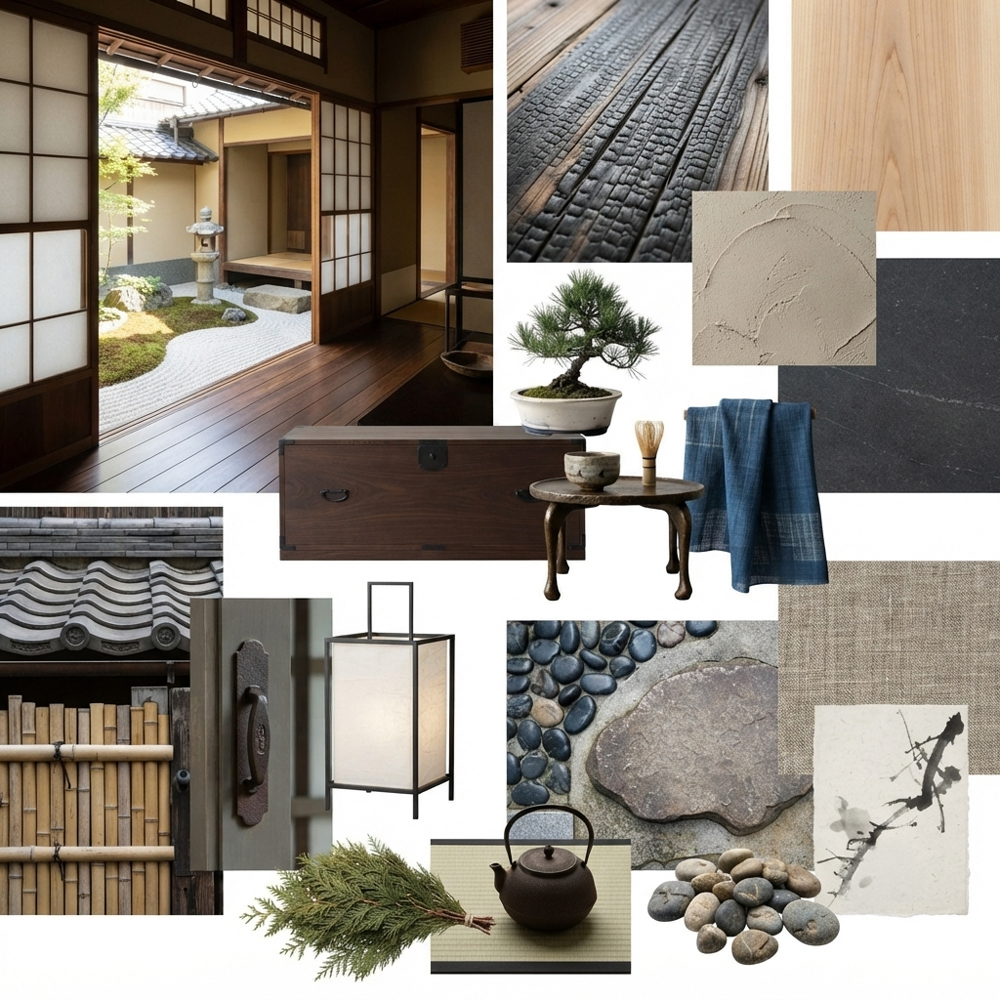
About the Japanese Courtyard style
Japanese courtyard architecture, known as the tsuboniwa, is a profound architectural typology that harmonizes human habitation with the natural world. Rooted in ancient Japanese traditions, this design philosophy transforms the home into a sanctuary by integrating a private, open-air garden into the very heart of the floor plan. Characterized by a "less is more" approach, these courtyards serve as essential lungs for the home, providing natural ventilation, abundant light, and a contemplative focal point that evolves with the seasons. Key architectural elements such as shoji sliding screens and engawa verandas blur the boundaries between interior and exterior, creating a fluid transition and a sense of expanded space even within dense urban environments.
Authentic Japanese courtyard design is guided by timeless principles including fukinsei (asymmetry), ma (the value of empty space), and wabi-sabi (the beauty of imperfection). Meticulously composed with weathered stones, moss-covered ground planes, and sculptural plants like Japanese maples or bamboo, the courtyard becomes a living landscape that fosters mental clarity and tranquility. In contemporary architecture, the Japanese courtyard model is increasingly utilized to create luxury retreats and wellness-oriented residences that offer complete privacy without sacrificing a connection to nature. By framing intentional views and embracing the passage of time, this architectural style provides a sophisticated and serene response to modern living, ensuring a home remains a place of quiet reflection and timeless elegance.