Era Themes
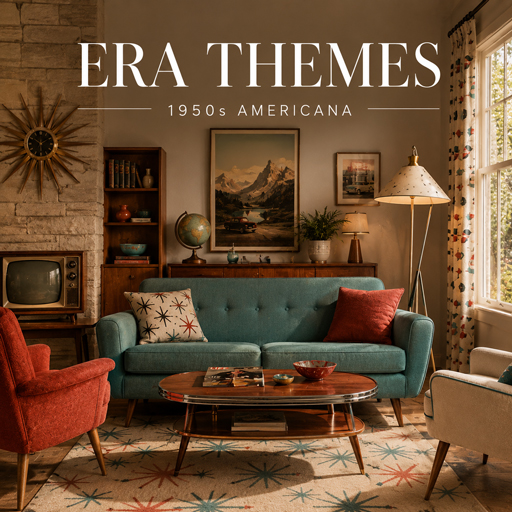
1950s Americana
1950s Americana interior design captures the post-war optimism of the United States through a blend of mid-century modernism and nostalgic traditionalism. This era is defined by the rise of open-plan ranch houses featuring clean-lined furniture with tapered legs, warm woods like walnut, and iconic atomic motifs such as starbursts and boomerangs. A cheerful color palette of pastels—including mint green, turquoise, and petal pink—is often contrasted with bold modern accents or diner-inspired elements like chrome and checkered patterns, creating spaces that are functional, vibrant, and quintessentially American.
Era Themes
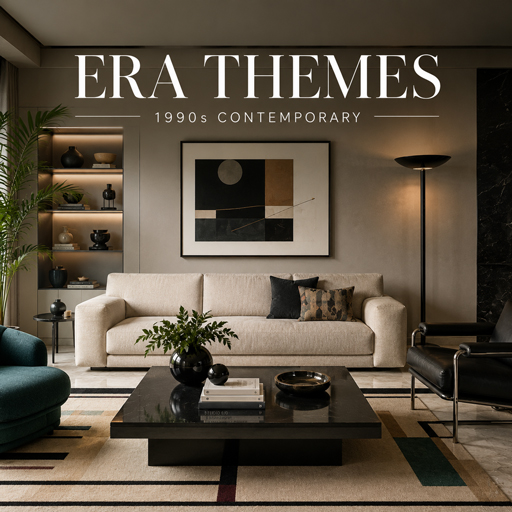
1990s Contemporary
1990s contemporary interior design represents a transitional era that moved away from the excessive glamour of the 1980s toward a more relaxed and functional aesthetic. This style is defined by a blend of minimalism and comfort, featuring warm neutral palettes, light wood finishes like blonde oak or pine, and the use of primary colors or deep jewel tones. Key elements include substantial, chunky furniture silhouettes, floral wallpapers, and a growing emphasis on open-plan layouts that prioritize a sense of calm and practicality.
Era Themes
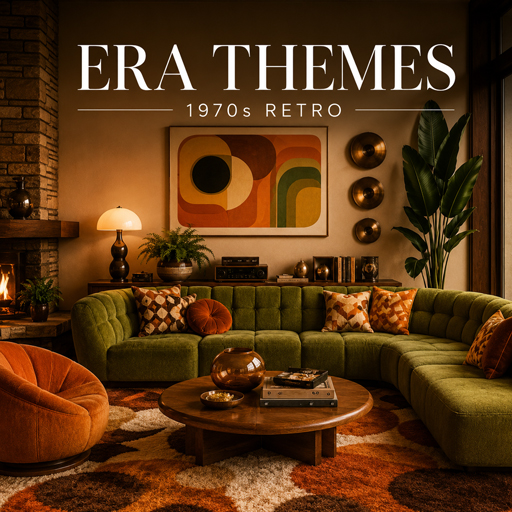
1970s Retro
1970s Retro interior design is a vibrant and eclectic style defined by a shift toward warmth, comfort, and self-expression. Characterized by a palette of earthy tones like harvest gold, avocado green, and burnt orange, this era emphasizes natural materials such as rattan, wood paneling, and stone alongside futuristic space-age plastics and chrome. Key architectural features often include open-plan layouts, sunken conversation pits, and large windows that connect the indoors with nature. With its signature mix of bold geometric patterns, shaggy textures, and low-slung modular furniture, 1970s Retro creates a relaxed, lived-in atmosphere that prioritizes individuality and cozy, informal social spaces.
Era Themes
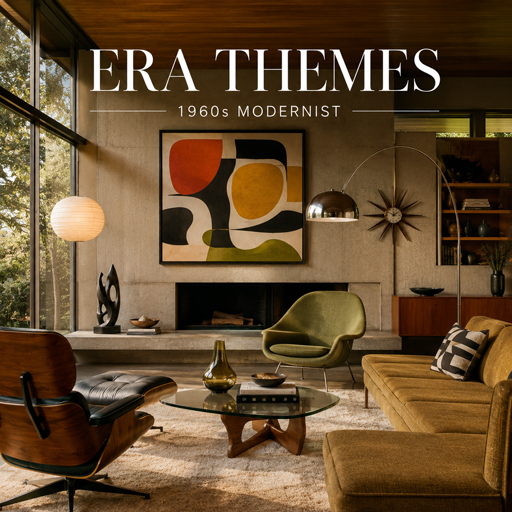
1960s Modernist
1960s Modernist interior design represents a radical shift toward creative freedom, characterized by a blend of sleek mid-century lines and bold, experimental aesthetics. This era is defined by the use of vibrant colors like harvest gold and avocado green, geometric and psychedelic patterns, and the introduction of innovative materials such as plastic, laminate, and molded foam. Architecture from this period emphasizes open-plan living, indoor-outdoor integration through large glass expanses, and futuristic, space-age forms that reflect the era's optimism and technological advancement.
Era Themes
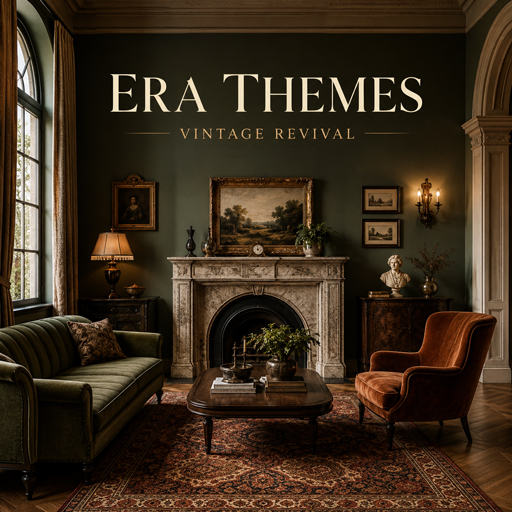
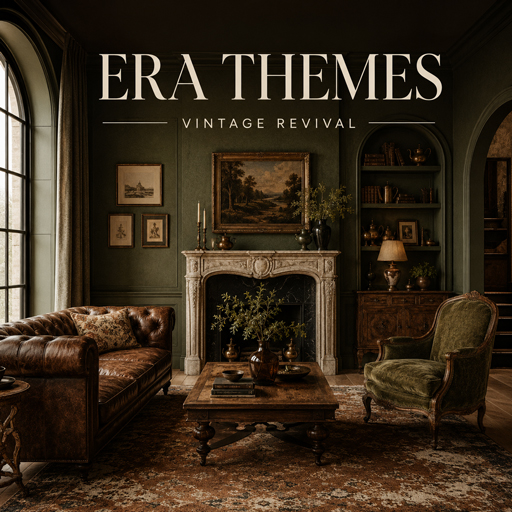
Vintage Revival
Vintage Revival within Era Themes is a nostalgic yet forward-thinking design approach that breathes new life into historical aesthetics by blending them with contemporary sensibilities. This style celebrates the charm of past decades—most notably from the 1940s through the 1980s—incorporating original artifacts, heirloom pieces, and iconic design motifs like bold geometric patterns and rich, earthy color palettes. By juxtaposing old-world textures such as velvet, rattan, and natural wood with modern materials and sleek silhouettes, Vintage Revival creates curated, soulful spaces that tell a story of timeless elegance and individual personality.
Era Themes
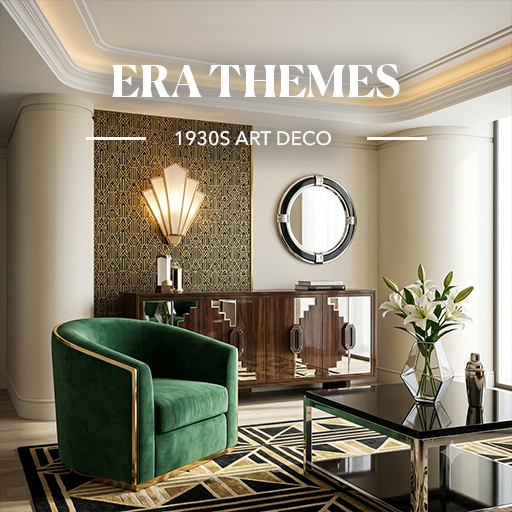
1930s Art Deco
The 1930s Art Deco style represents a refined evolution of the movement, transitioning from 1920s opulence into a sleeker, more aerodynamic aesthetic known as Streamline Moderne. This era is defined by sophisticated geometric forms, symmetrical layouts, and the integration of industrial materials like chrome, stainless steel, glass, and Bakelite alongside luxury finishes such as lacquer and exotic woods. Characterized by bold jewel tones, sunburst motifs, and polished surfaces, the style emphasized a sense of technological progress and modern glamour, as famously embodied in the architectural grandeur of New York City's Chrysler Building.
Era Themes
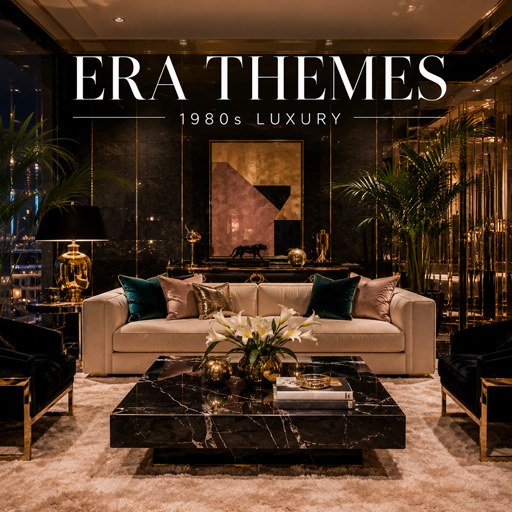
1980s Luxury
1980s Luxury interior design is characterized by an aesthetic of opulence, excess, and bold experimentation. This era embraced high-gloss finishes, such as polished brass, chrome, and lacquered surfaces, paired with extravagant materials like marble, velvet, and leather. Architecturally, the style featured dramatic geometric forms, asymmetrical rooflines, and open, voluminous spaces with cathedral ceilings and sunken living rooms. Vibrant jewel tones and soft pastels were often contrasted against black or mirrored walls to create visually striking, high-status environments designed for both grandeur and social entertaining.
Era Themes
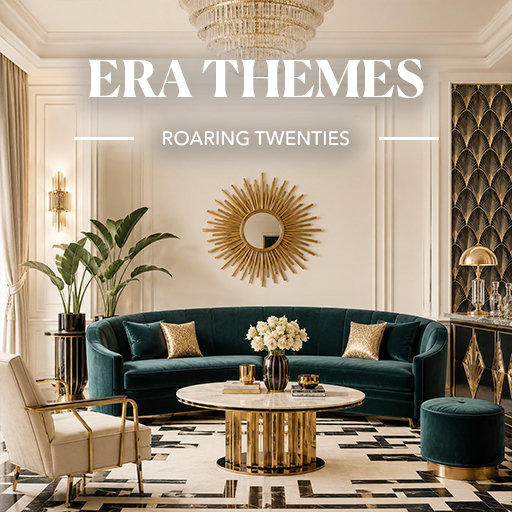
Roaring Twenties
The Roaring Twenties interior design, epitomized by the Art Deco movement, is defined by a sense of opulence, glamour, and forward-looking optimism. This style features bold geometric motifs like sunbursts, chevrons, and zigzags, often arranged in meticulous symmetry to create a structured and sophisticated aesthetic. Characterized by a mix of high-end materials such as chrome, lacquered wood, marble, and velvet, the era emphasized dramatic contrasts and luxurious textures. Rich jewel tones and monochromatic palettes were frequently accented with polished metals like gold and silver, reflecting the technological progress and exuberant spirit of the machine age.
Era Themes
Victorian Revival
Victorian Revival interior design honors the ornate elegance of the 19th century by blending historical grandeur with contemporary sensibilities. This style is defined by rich jewel tones, such as emerald and burgundy, alongside architectural details like elaborate moldings, high ceilings, and bay windows. By layering luxurious textiles like velvet and silk with a mix of authentic antiques and modern furnishings, Victorian Revival creates a romantic, maximalist aesthetic that feels both storied and sophisticated for the modern home.
Era Themes
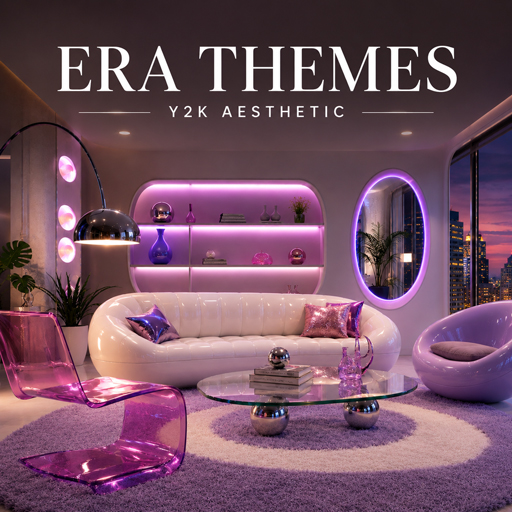
Y2K Aesthetic
The Y2K Aesthetic in interior design is a retrofuturistic style that celebrates the optimistic and tech-driven spirit of the late 1990s and early 2000s. It is characterized by vibrant, neon color palettes, metallic chrome finishes, and playful "blobject" forms with curved, biomorphic lines. Key elements include inflatable furniture, translucent materials, and nostalgic technology like lava lamps and butterfly motifs, creating a whimsical yet futuristic space that balances kitsch energy with sleek, digital-era cool.
Era Themes
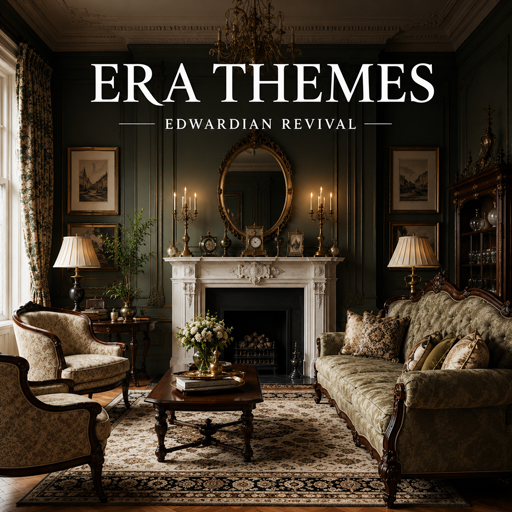
Edwardian Revival
Edwardian Revival interior design draws inspiration from the early 20th-century British era, focusing on a transition from Victorian heaviness to a lighter, more airy aesthetic. This style is characterized by the use of fresh pastel color palettes, such as soft greens, blues, and creams, which maximize the impact of natural light from large sash or bay windows. Incorporating eclectic influences from the Arts and Crafts and Art Nouveau movements, it features clean lines, floral motifs, and high-quality materials like mahogany and wicker. The design emphasizes simplicity and comfort, creating refined, uncluttered spaces that feel both elegant and welcoming.
Era Themes
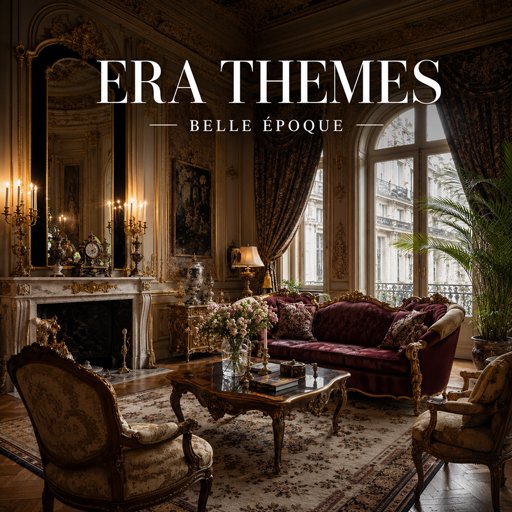
Belle Époque
The Belle Epoque style, flourishing between the late 19th century and World War I, is characterized by optimism, opulence, and an eclectic blend of historical and modern influences. In interiors and architecture, this era is defined by the lavish ornamentation of Art Nouveau, featuring sinuous organic curves, floral motifs, and the innovative use of materials like wrought iron, glass, and reinforced concrete. Spaces typically emphasize grandeur through high ceilings, decorative moldings, and a seamless integration of fine craftsmanship with industrial progress to create environments of timeless elegance and cultural refinement.