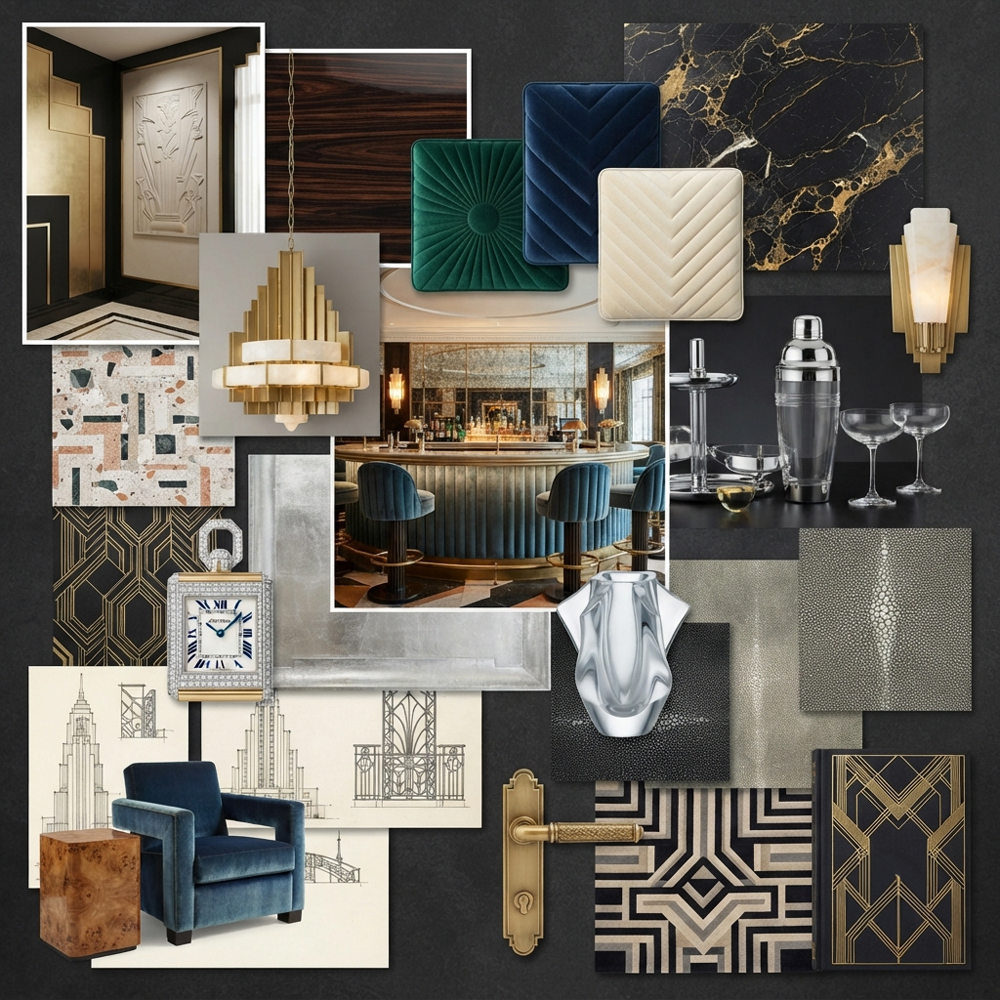
The 1930s Art Deco style represents a refined evolution of the movement, transitioning from 1920s opulence into a sleeker, more aerodynamic aesthetic known as Streamline Moderne. This era is defined by sophisticated geometric forms, symmetrical layouts, and the integration of industrial materials like chrome, stainless steel, glass, and Bakelite alongside luxury finishes such as lacquer and exotic woods. Characterized by bold jewel tones, sunburst motifs, and polished surfaces, the style emphasized a sense of technological progress and modern glamour, as famously embodied in the architectural grandeur of New York City's Chrysler Building.
Upload a photo of your room and our AI restyles it in the 1930s Art Deco aesthetic — no signup needed.
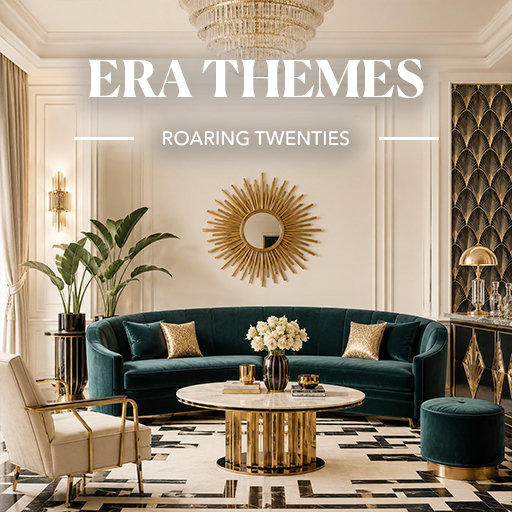
1930s Art Deco interior design and architecture represent the sophisticated evolution of a movement that defined twentieth-century luxury and modernism. During this era, the style matured into a sleeker, more streamlined aesthetic often referred to as Streamline Moderne, which prioritized aerodynamic curves and polished surfaces alongside traditional Art Deco elements. This design theme is characterized by bold geometric patterns, including chevrons, zigzags, and sunburst motifs, all arranged with a commitment to symmetry and structured elegance. The 1930s palette shifted toward dramatic combinations of rich jewel tones—like emerald green and deep burgundy—contrasted with metallic gold, silver, or chrome accents. Materials used during this period reflected a blend of high-end craftsmanship and industrial innovation, featuring lacquered wood, marble, and exotic timbers alongside new substances like Bakelite, glass block, and stainless steel. Whether in the grand scale of iconic skyscrapers or the intimate setting of a residential interior, 1930s Art Deco fosters an atmosphere of optimistic glamour and timeless sophistication, celebrating the beauty of the machine age through refined, functional art.