About the 1980s Luxury style
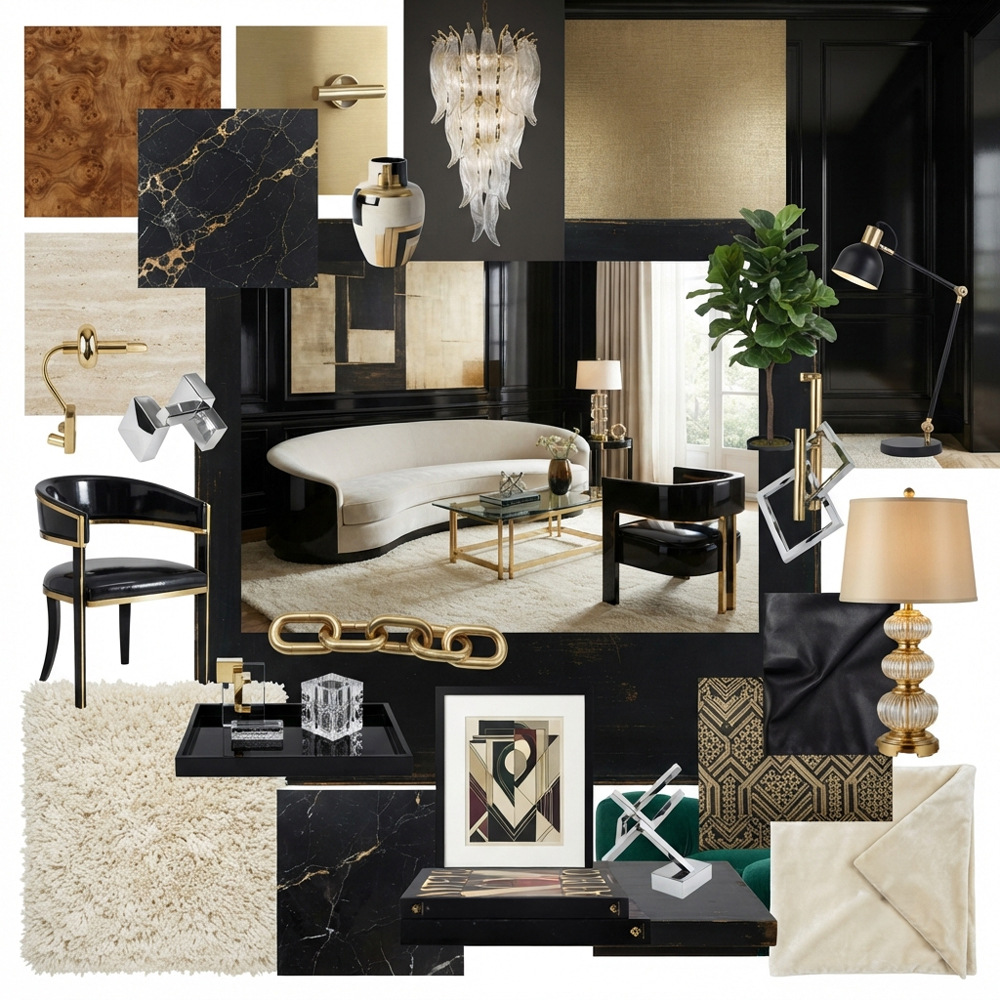
1980s Luxury interior design, a prominent pillar of Era Themes, is defined by an unapologetic embrace of opulence, bold experimentation, and the "more is more" philosophy of the postmodern movement. This aesthetic captures the decade's fascination with wealth and status, blending sleek futurism with a revival of Art Deco glamour. Characterized by high-gloss lacquered furniture, mirrored walls, and shimmering metallic accents in brass and chrome, the style creates high-contrast environments that are both dramatic and sophisticated.
Central to this theme is a daring color palette that ranges from soft, sophisticated pastels like mauve, peach, and seafoam green to vibrant neon hits and deep jewel tones. Luxurious materials such as highly-veined marble, polished granite, and exotic woods are paired with plush textiles like velvet and leather to ground the space in comfort and grandeur. Design elements often feature soft, rounded silhouettes—such as curved "cloud" sofas and waterfall-edge tables—contrasted against sharp geometric patterns and abstract motifs inspired by the Memphis Group.
Lighting serves as a theatrical focal point, utilizing low-voltage halogen lamps, neon tubing, and tiered crystal chandeliers to create a moody, cinematic atmosphere. In architecture, 1980s Luxury is marked by expansive, open floor plans, sunken living rooms, and the iconic use of glass blocks to divide spaces while maintaining a sense of airy luminosity. Today, this era-specific theme offers a nostalgic yet refined choice for those looking to infuse contemporary interiors with a sense of playful rebellion and timeless upscale flair.